A wastewater treatment system can perform well for years and still develop operational problems as wastewater volume, pollutant loading, equipment condition, and plant activities change. Issues such as odor, cloudy effluent, excessive sludge, foaming, or poor laboratory results are often signs that one or more parts of the treatment process are no longer working under the conditions for which they were designed.
Understanding common wastewater treatment problems is important because correcting the visible symptom alone may not solve the actual cause. Effective troubleshooting should consider wastewater characteristics, process conditions, equipment performance, operating records, and maintenance practices.
1. Strong or Unpleasant Odor
Persistent odor is one of the most noticeable signs of treatment imbalance. In aerobic systems, foul odors may develop when dissolved oxygen becomes too low, wastewater remains stagnant, sludge accumulates, or organic loading increases beyond the system’s treatment capacity.
Operators should check blower operation, air distribution, diffuser condition, tank mixing, sludge accumulation, and incoming wastewater load. Restoring adequate aeration and removing excessive settled solids can often improve conditions, but recurring odor should be investigated further rather than controlled only with deodorizing chemicals.
2. Insufficient Aeration
Aeration provides oxygen for microorganisms that break down biodegradable organic matter. When oxygen transfer is inadequate, biological treatment efficiency can decline.
Common causes include clogged diffusers, damaged air lines, improperly adjusted valves, blower wear, increased wastewater loading, or an undersized aeration system.
Check whether air is distributed evenly across the tank and verify blower pressure, airflow, and operating condition. Diffusers should be inspected and cleaned or replaced when necessary. If production has increased significantly, the aeration requirement may need to be recalculated.
3. High Turbidity or Cloudy Effluent
Treated wastewater that remains cloudy may contain excessive suspended solids or biological floc escaping from the settling stage.
Possible causes include poor sludge settling, excessive hydraulic flow, process shock, insufficient treatment time, disturbed clarifier conditions, or poor filtration performance.
The solution should begin by identifying where solids are being carried forward. Operators should review tank levels, flow rates, sludge condition, settling performance, and downstream filters. Increasing chemical dosage without determining the cause may increase sludge production without improving long-term performance.
4. Poor Sludge Settling
Healthy biological solids should separate effectively from treated water. When sludge settles slowly or remains suspended, effluent quality can deteriorate.
Poor settling may be associated with biological imbalance, excessive or insufficient aeration, sudden changes in wastewater composition, high hydraulic loading, or improper sludge age.
A settling observation or laboratory evaluation can help determine how the sludge behaves. Corrective action may include adjusting aeration, controlling flow, wasting excess sludge, or improving equalization before the biological treatment stage.
5. Excessive Sludge Accumulation
Sludge is a normal by-product of wastewater treatment, but excessive accumulation reduces usable tank volume and can interfere with pumps, aeration, settling, and overall treatment performance.
A sludge management schedule should be established based on actual accumulation rather than waiting for tanks to become overloaded. Operators should regularly observe sludge levels and arrange proper removal, dewatering, handling, or disposal as required.
6. Foaming in the Aeration Tank
Some foam may occur during biological treatment, particularly during startup or changes in loading. Persistent or heavy foam, however, can indicate process imbalance.
Potential causes include surfactants or detergents in the influent, young sludge, excessive organic loading, certain filamentous microorganisms, or operating conditions that favor stable foam formation.
Troubleshooting should include reviewing influent sources, sludge condition, aeration pattern, and recent changes in plant operations. Foam should not automatically be treated with chemicals without understanding why it is forming.
7. High BOD or COD in the Final Effluent
High biochemical oxygen demand (BOD) or chemical oxygen demand (COD) can indicate that organic contaminants are not being adequately removed.
Possible causes include insufficient biological activity, inadequate retention time, low oxygen levels, sudden increases in organic loading, toxic substances entering the system, or treatment capacity that no longer matches actual wastewater generation.
Operators should compare current flow and laboratory data with the system’s design basis. A significant increase in production or wastewater strength may require process adjustment or system upgrading rather than routine maintenance alone.
8. Pump, Blower, and Equipment Problems
Mechanical equipment is essential to wastewater treatment. Pump failure can interrupt wastewater transfer, while blower problems can reduce oxygen supply to biological tanks.
Routine preventive maintenance should include checking unusual noise, vibration, leakage, motor temperature, electrical condition, pressure, flow, and operating hours. Standby equipment is particularly valuable for critical pumps and blowers where failure could interrupt the treatment process.
9. Inconsistent Chemical Dosing
Chemical treatment can become ineffective when dosing is based on guesswork or when pumps are poorly calibrated.
Changes in wastewater flow, pH, or contaminant concentration can alter chemical demand. Excessive dosing may increase operating cost and sludge production, while insufficient dosing may fail to achieve the treatment objective.
Chemical dosage should be based on actual process requirements and verified through appropriate testing, monitoring, and dosing-pump calibration.
When Is a Technical Assessment Needed?
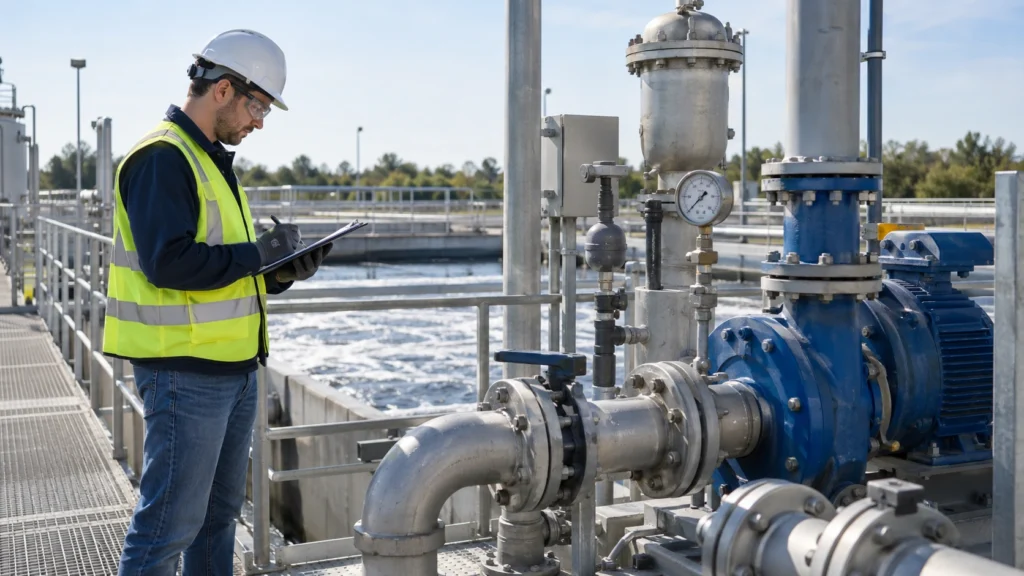
Repeated treatment problems often indicate that the facility should be evaluated as a complete system.
A technical assessment is advisable when problems continue despite routine maintenance, effluent results remain inconsistent, wastewater volume has increased, equipment operates continuously at maximum capacity, or the facility is planning production expansion.
Kanotech Industrial Engineering Services evaluates wastewater treatment systems by considering process conditions, tanks, pumps, blowers, diffusers, filtration, piping, controls, operating practices, and current wastewater requirements.
The goal of troubleshooting is not simply to replace equipment. It is to identify the cause of poor performance and determine a practical corrective action that supports stable, maintainable, and reliable wastewater treatment.