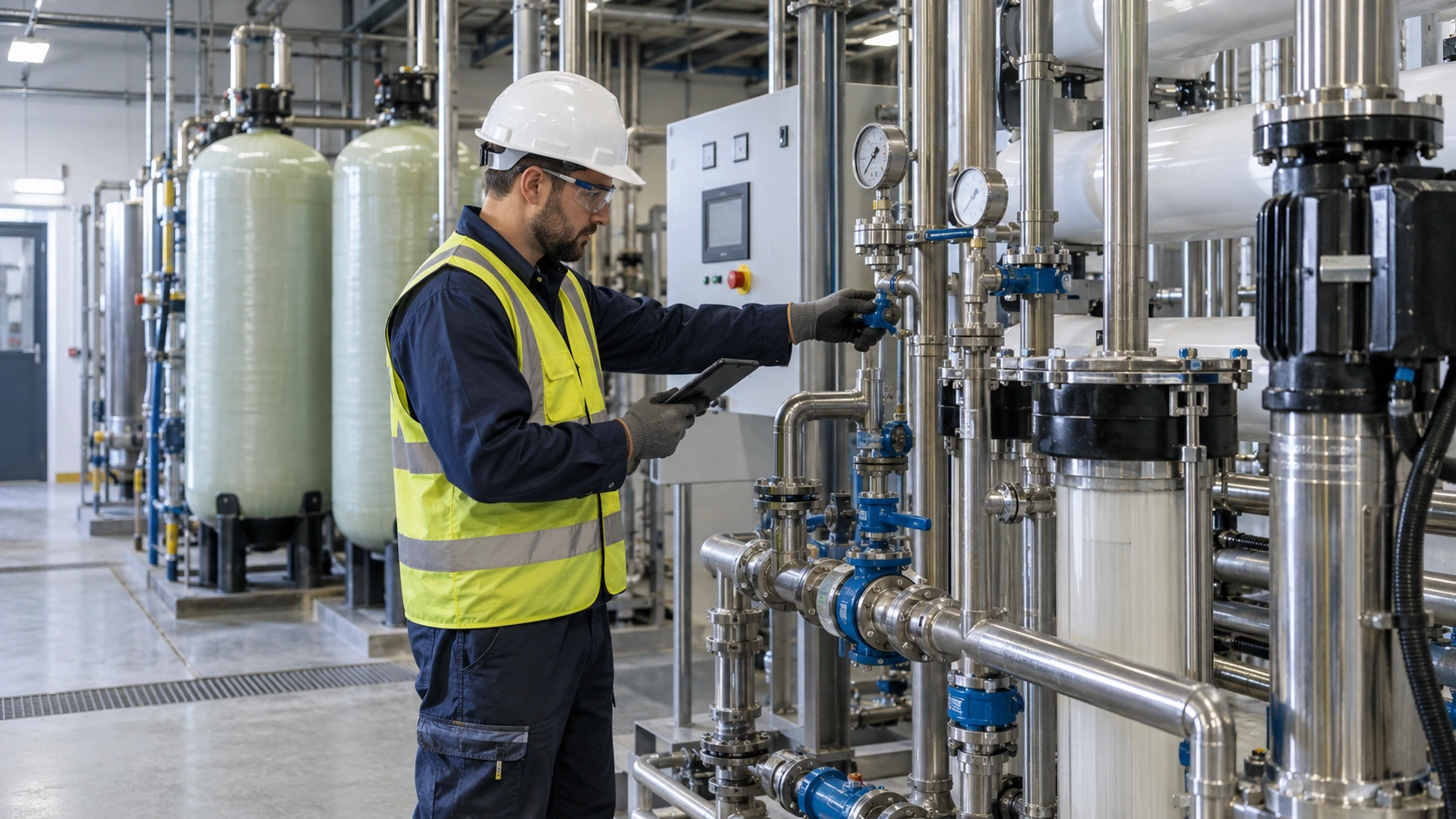
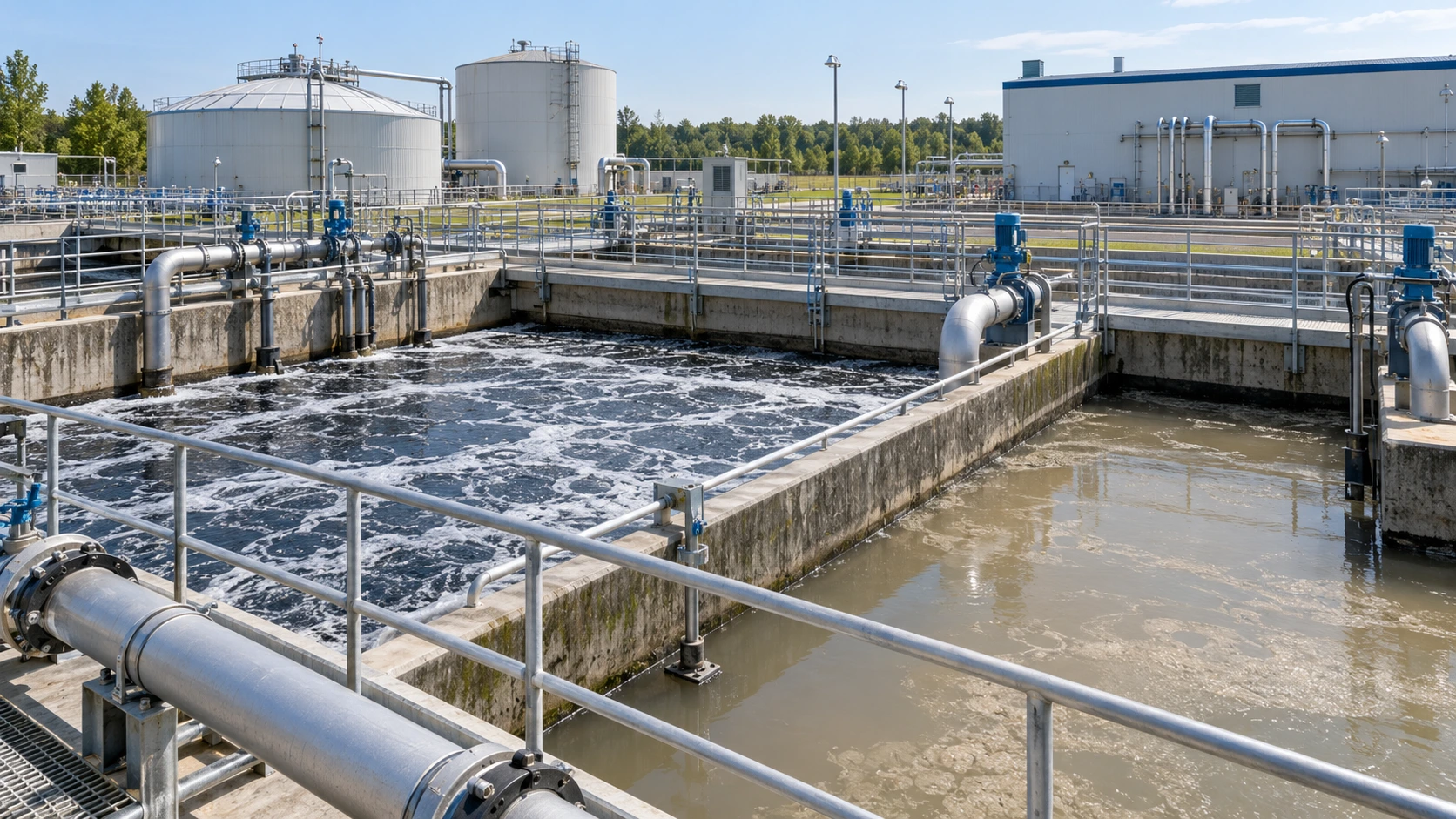
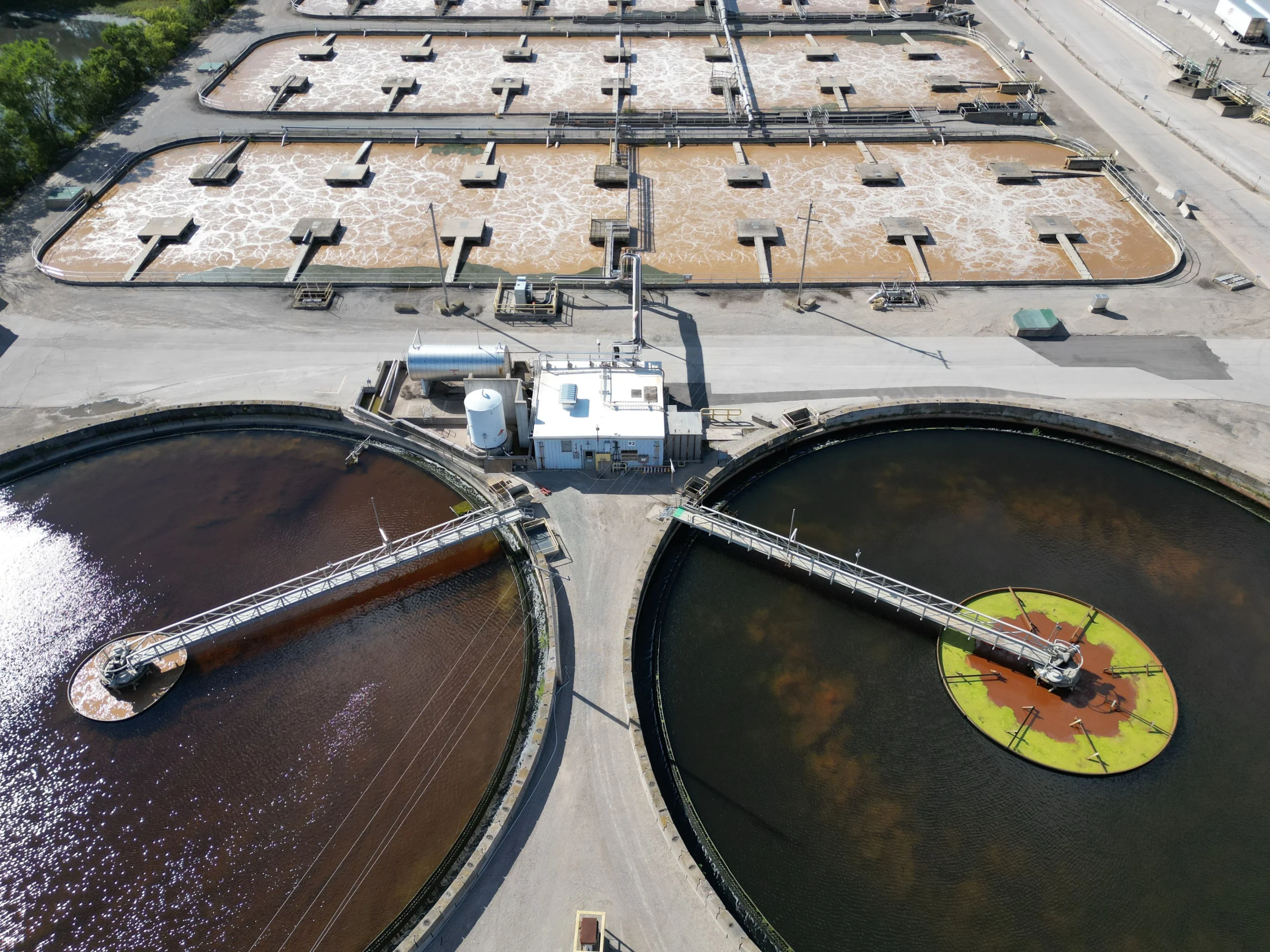
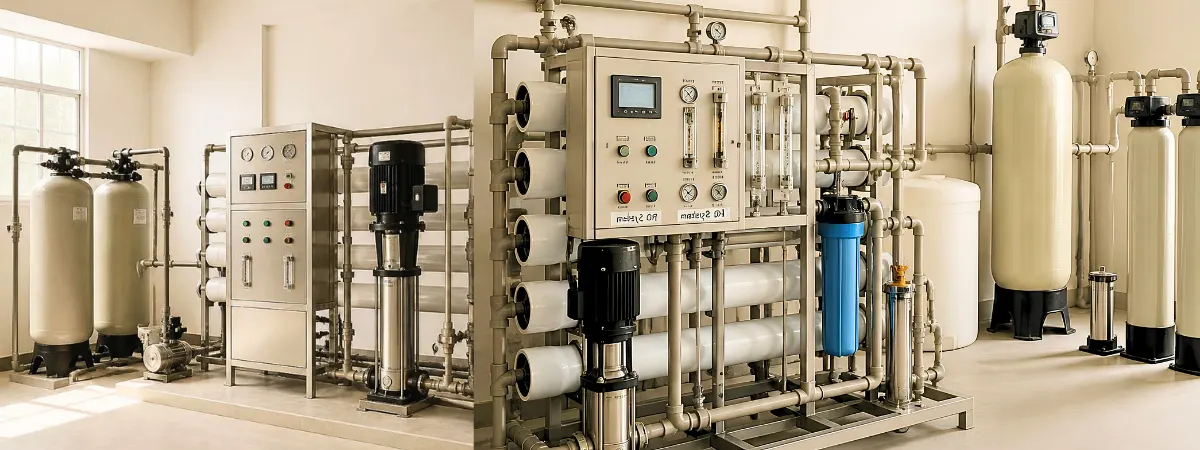
Industrial water treatment systems depend on multiple components working together to maintain reliable water quality and flow. Filters, pumps, softeners, reverse osmosis systems, valves, instruments, piping, and electrical controls all require routine inspection and servicing.
Without proper maintenance, small issues can gradually develop into reduced water production, poor water quality, higher operating costs, excessive pressure loss, membrane fouling, equipment failure, or unplanned shutdowns.
A structured industrial water treatment maintenance program helps identify early signs of deterioration before they affect the entire system.
Preventive maintenance should not be limited to repairing equipment after failure. It should be based on regular monitoring, equipment condition, operating data, manufacturer recommendations, and the actual demands of the facility.
Why Preventive Maintenance Is Important
Water treatment systems operate continuously or for extended hours in many industrial facilities.
Over time, suspended solids, hardness minerals, chemicals, corrosion products, and normal mechanical wear can affect equipment performance.
A preventive maintenance program can help:
- Maintain consistent water quality
- Reduce unexpected equipment breakdown
- Improve system reliability
- Extend equipment service life
- Reduce unnecessary chemical consumption
- Maintain proper flow and pressure
- Protect downstream process equipment
- Support efficient plant operation
Maintenance records are also useful because they provide a history of system performance and help identify recurring problems.
1. Monitor Pressure and Flow Rates
Pressure and flow are among the most useful operating indicators in a water treatment system.
A gradual increase in pressure drop across a filter may indicate that the media or cartridge is becoming clogged. Reduced product-water flow from an RO system may suggest membrane fouling, scaling, insufficient feed pressure, or another process issue.
Operators should regularly record:
- Feed pressure
- Filter inlet and outlet pressure
- RO operating pressure
- Product-water flow
- Reject-water flow
- Pump discharge pressure
- System flow rate
Changes from normal operating conditions should be investigated rather than ignored.
2. Maintain Multimedia and Activated Carbon Filters
Multimedia filters are commonly used to reduce suspended solids and turbidity, while activated carbon filters may be used for chlorine, odor, color, or organic reduction.
As contaminants accumulate in the media bed, pressure loss can increase and filtration performance may decline.
Routine maintenance should include:
- Monitoring inlet and outlet pressure
- Performing backwash at the appropriate interval
- Checking control valves
- Inspecting piping for leakage
- Confirming proper backwash flow
- Evaluating media condition
- Replacing or replenishing media when required
Backwashing should be adequate to clean and expand the media bed without unnecessarily wasting water.
3. Check Water Softener Performance
Water softeners rely on ion-exchange resin to remove hardness minerals such as calcium and magnesium.
As resin capacity is exhausted, the unit must undergo regeneration using brine.
Poor softener performance may result from improper regeneration, insufficient salt, resin fouling, valve problems, or excessive water demand.
Regular checks should include:
- Raw water hardness
- Treated water hardness
- Brine tank level
- Salt condition
- Regeneration frequency
- Control valve operation
- Resin condition
If hardness begins to appear in the treated water before the expected regeneration cycle, the system should be evaluated.
4. Maintain Reverse Osmosis Systems
Reverse osmosis systems require careful monitoring because membranes are sensitive to scaling, fouling, chlorine exposure, and improper operating conditions.
Operators should regularly check:
- Feed pressure
- Product-water flow
- Reject-water flow
- Conductivity
- Pressure differential
- Recovery rate
- Cartridge filter condition
- Chemical dosing
- Membrane performance
A gradual decline in permeate flow or increase in conductivity can indicate that the membranes require investigation.
Cleaning-in-place, commonly known as CIP, may be required when membrane performance decreases beyond acceptable operating limits.
However, frequent membrane cleaning may indicate that pretreatment needs improvement.
5. Inspect Pumps and Motors
Pumps are critical to maintaining water movement through the treatment system.
A pump problem can reduce flow, lower system pressure, or stop production entirely.
Routine pump and motor inspection should include:
- Unusual noise
- Excessive vibration
- Leakage
- Motor temperature
- Bearing condition
- Electrical current
- Suction and discharge pressure
- Mechanical seals
- Couplings
- Mounting bolts
Operators should investigate changes in sound or vibration early, as these may indicate developing mechanical problems.
6. Replace Cartridge Filters When Needed
Cartridge filters protect sensitive downstream equipment, particularly RO membranes.
As cartridges collect particles, pressure drop increases.
Waiting too long before replacement can restrict system flow and force pumps to operate under less efficient conditions.
Replacement intervals should be based on pressure differential, operating hours, water quality, and equipment requirements rather than a fixed calendar schedule alone.
7. Inspect Valves, Piping, and Fittings
Water treatment piping systems contain multiple valves, elbows, tees, unions, flanges, and fittings.
Even minor leakage can result in water loss, corrosion, pressure reduction, and unsafe working conditions.
Maintenance personnel should inspect for:
- Leakage
- Corrosion
- Loose connections
- Damaged supports
- Valve malfunction
- Cracked fittings
- Unusual vibration
- Deteriorated gaskets
Isolation valves should also be operated periodically where appropriate to confirm that they remain functional.
8. Check Chemical Dosing Systems
Chemical dosing may be used for pH adjustment, antiscalant, disinfection, or other treatment requirements.
Incorrect dosing can affect water quality and downstream equipment.
Operators should check:
- Chemical tank levels
- Dosing pump operation
- Calibration
- Injection points
- Tubing condition
- Chemical concentration
- Leakage
- Electrical controls
Chemical dosing should be based on actual treatment requirements and verified through regular testing.
9. Inspect Electrical and Control Components
Electrical controls, pressure switches, sensors, relays, and automatic valves are essential for system operation.
Maintenance should include checking control panels for loose connections, overheating, alarms, moisture, unusual noise, or damaged components.
Instrumentation should also be calibrated when required.
A mechanical system may appear operational while producing poor results if sensors or controls are providing inaccurate readings.
Keep Proper Maintenance Records
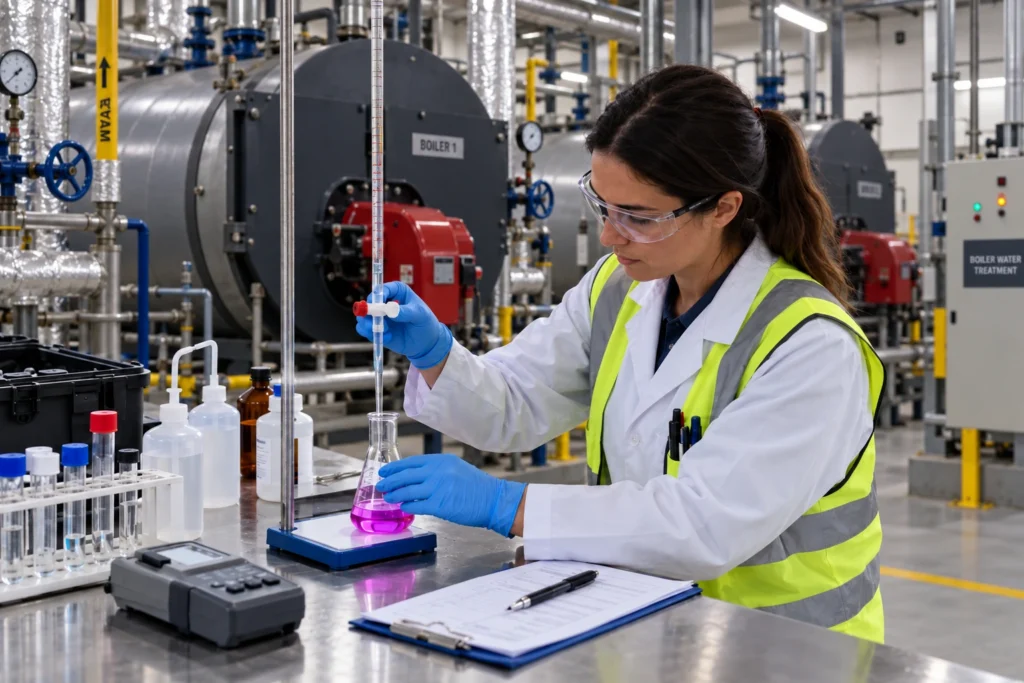
Good maintenance begins with good records.
A daily or weekly operating log can include:
Flow rate
Pressure
Conductivity
Hardness
pH
Filter condition
Chemical usage
Equipment operating hours
Maintenance performed
Abnormal observations
Historical data helps operators identify gradual changes that may not be obvious during a single inspection.
When Should Equipment Be Repaired or Replaced?
Not every water treatment problem requires immediate replacement.
Some equipment can be restored through cleaning, adjustment, repair, media replacement, or component servicing.
Replacement may be considered when equipment repeatedly fails, spare parts are no longer available, corrosion becomes severe, system capacity is no longer sufficient, or operating costs become excessive.
A technical assessment can help determine whether repair, rehabilitation, upgrading, or replacement is the most practical solution.
Water Treatment Maintenance and Technical Support from Kanotech
Kanotech Industrial Engineering provides support for industrial and commercial water treatment systems, including inspection, troubleshooting, maintenance, rehabilitation, equipment replacement, system improvement, and technical assessment.
Our approach considers the entire treatment process—including filters, softeners, reverse osmosis systems, pumps, valves, piping, controls, and operating conditions.
The objective of preventive maintenance is simple: identify problems early, maintain reliable water quality, and help keep the treatment system operating efficiently and consistently.